UnderMining Agriculture: How the Extractives Industries Threaten Our Food Systems

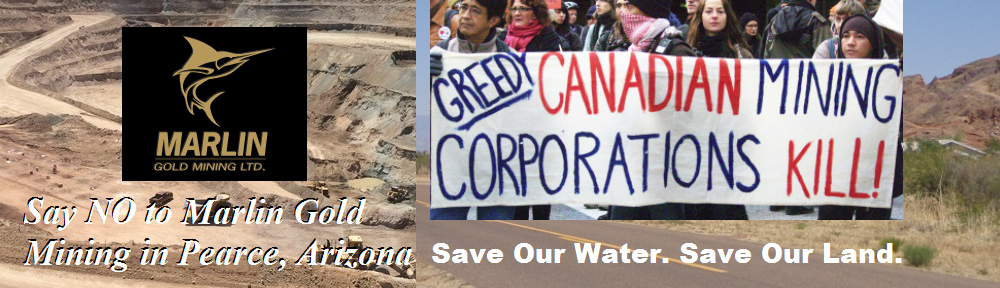
Commonwealth Mine Pearce Arizona

The Gaia Foundation’s new report – UnderMining Agriculture: How the Extractives Industries Threaten our Food Systems exposes the hidden costs of mining on food, water, land, air and climate, showing how each is increasingly affected by toxins as the global land and water grab intensifies. The report is a timely call to action for all food justice and anti mining organisations to come together with a harder line against the extractives sector. The world’s food production and millions of small farmers and communities are under threat.

Case studies from around the world illustrate how mining is destroying the conditions essential for healthy and productive agriculture as communities testify to experiencing livestock deaths, soil pollution, acidic water supplies, desertification of agricultural lands, and being forcibly displaced. Promises of job creation and economic growth have been shown to be exaggerated, short-lived and only benefiting the few, whilst the lasting impact on the communities and ecosystems they depend upon are yet to be fully analysed and exposed…Read Full Article

Download Complete PDF Report

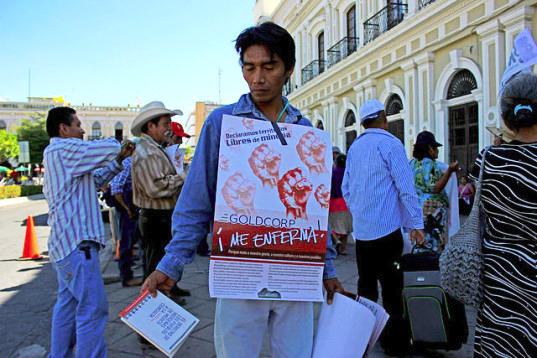
Guatemalan Protestor Burned Alive for Speaking Out Against Canadian Mining Company GoldCorp

goldcorp

A Guatemalan protestor was beaten and burnt to death after he dared to speak against the Marlin gold mine, which is owned by Canadian company GoldCorp. The man, who was a member of an indigenous tribe, was reportedly killed by workers from the company who doused him with petrol before throwing a lit match onto his body… Read Full Article

Water is More Precious than Gold

Call for action on water rights: the ADWR response

earth fissures

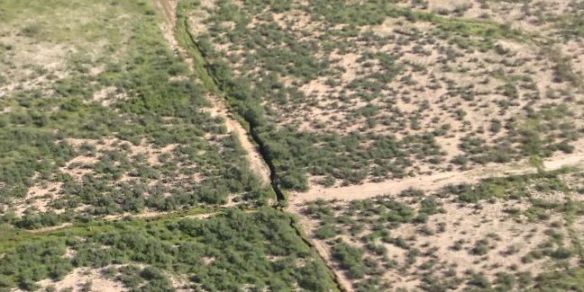
Earth fissures in the Pearce/Sunsites area. Aerial photos of “fairly new fissures” were taken just north of the Richland Store, west of Highway 191. Pilot Mark Spencer says that this fissure “nearly follows a road, but heads off at either end.”

State water officials are responding to concerns expressed by residents in the Pearce/Sunsites area.

Michael J. Lacey, director of the Arizona Department of Water Resources (ADWR), said Friday that “due to heightened concerns about groundwater conditions in the Willcox and Douglas areas,” he has ordered his staff  “to conduct a more detailed sweep of water level conditions throughout those areas.”

The water level sweep is scheduled to take place in December of this year.

“The Department has been and will continue to work closely with individuals in Cochise County to respond to their concerns,” he told the Range News.

In an Aug. 28 e-mail, Murray McClelland, president of the Pearce/Sunsites Chamber of Commerce, had called upon the Arizona State Legislature to immediately begin a study “for the adjudication of water rights in the State of Arizona.” … Read Full Article

The “pump and dump” fraudulent practices of junior Canadian mining companies is catching up to them

Will Canadian regulators be able to avoid the final fatal crash of the TSX Venture Exchange?

The answer of course is no, if history is any guidance. So what is wrong with the central Canadian market place, the world’s most important stock exchange for the junior resource and energy sector?

The last 3 years have seen a meltdown in the TSX-V share values that brought it right back to where it started almost 10 years ago. We have been witnessing on the TSX-V an unprecedented historical annihilation in shareholder value that has not been seen in this form on any other stock exchange in the world, followed by the worst fund raising crisis in history.  The lack of funding has reached such a critical stage that the TSX-V in its current constitution appears to be in danger of becoming a memory in Canadian history books in the not so distant future. Market participants who had to endure the 4-year post-BreX funding pause in the resource markets think of it as a coffee break, compared to what desperate companies are experiencing at this time… Read Full Article

Source: http://www.mining.com/web/will-canadian-regulators-be-able-to-avoid-the-final-fatal-crash-of-the-tsx-venture-exchange-tsx-v/

Note: This article was written by Dr. Volkmar G. Hable who is a physicist and geoscientist by training and holds a Ph.D. in geosciences and a B.Sc. in Agriculture and Agronomics.

“Forget about oil, gas, copper and gold. No water equals no life.”

Sunsites resident calls for action on water rights

Sunsites Arizona

COCHISE COUNTY — The president of the Pearce/Sunsites Chamber of Commerce has called upon the Arizona State Legislature to immediately begin a study “for the adjudication of water rights in the State of Arizona.”

“The 800-pound gorilla in the room that no one in Phoenix wants to talk about is getting ready to wreak havoc on our aquifers and reservoirs,” Murray J. McClelland said in his Aug. 28 e-mail to State Sen. Gail Griffin, and Reps. David Gowan and David Stevens.

He went on to say that Lake Mead is the largest reservoir in the Colorado River Compact system, providing water to more than 40 million people in five western states – including 80-percent of Arizona’s population.

He added that it is also Southern Nevada’s primary source of hydro-electric power… Read Full Article

Source: http://www.willcoxrangenews.com/news/article_84fa64e0-32f0-11e4-9837-0019bb2963f4.html


Canadian mining companies look more and more like they’re governed by Bond villains

The Harper Government Has Refused to Fill a Position to Oversee the Mining Industry

Canadian Mining

The Harper government is dragging its feet on filling a nearly year-old vacancy for a job to oversee Canada’s controversial mining industry. The position has already been widely criticized as an astroturfing effort to boost the damaged image of Canadian mining interests worldwide, despite its supposed mission of addressing the issues of our mining companies that are marauding throughout the Global South. But even though the job was panned for being ineffective, not having an overseer at all is clearly much worse than having a neutered one.

And things may soon get even more out of hand.

If you aren’t already familiar, 75 percent of the world’s mining companies are headquartered in Canada. Domestically, mining is a $50 billion a year industry that employs hundreds of thousands of people. The vast majority of the world’s mining capital flows through Toronto Stock Exchange. Canadian mining companies are spending some $130 billion abroad.

So when reports spring up about mining companies behaving badly, which is a frequent occurrence, there’s a very good chance the company is Canadian… Read Full Article

The Environmental Disaster That is the Gold Industry

The mining industry has had a devastating impact on ecosystems worldwide. Is there any hope in sight?

By Alastair Bland
smithsonian.com

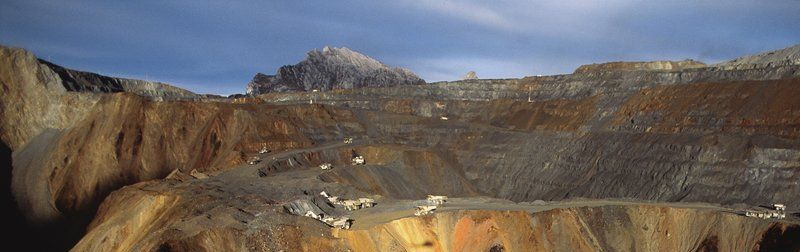
Gold Mining

“…the Environmental Protection Agency has reported that 40 percent of watershed headwaters in the western United States have been contaminated by mining operations. Many of these are tiny sites, and there are, overall, roughly 500,000 defunct metal mines in 32 western states that the EPA has plans to clean up. Remediation of these sites may cost more than $35 billion.” Read Full Article

Delta Gold Corporation Announces Q3 2014 Financial Results

VANCOUVER, BRITISH COLUMBIA–(Marketwired – Aug 29, 2014) – Delta Gold Corporation (the “Company” or “Delta“) (TSX VENTURE:DLT) reports that it has filed on SEDAR (www.sedar.com.) its unaudited condensed interim consolidated financial statements and related management discussion and analysis (“MD&A”) for three and nine months ended June 30, 2014.

The Company reported a loss and comprehensive loss for the three and nine months ended June 30, 2014 of $454,079 and $3,775,122 respectively compared with $591,406 and $2,636,738 in the three and nine months ended June 30, 2013.

The activities in the current financial reporting period focused on business development investigations and the recently announced transaction with Commonwealth Silver and Gold Mining Inc. (“CSGM”),

The Company’s working capital at June 30, 2014 was $4,298,678.

On June 6, 2014 Delta and CSGM signed a definitive arrangement agreement (the “Transaction”) with respect to a proposed combination which would result in a reverse takeover of Delta by CSGM.

The Transaction with CSGM is now expected to close by the end of October 2014. Finalizing the required documentation and responding to queries from the TSX Venture Exchange has delayed the overall process and the concurrent financing. The Company expects its stock to remain halted from trading until the closing of the Transaction.

Delta’s CEO, Marco Romero, stated: “We continue to focus on closing the Transaction with CSGM. This will allow us to diversify and to deliver a nearer term gold and silver mine development opportunity with strong exploration potential that is synergistic with the Imperial Project. We have also continued our dialogue with the Quechan Tribe, striving to develop a mutually respectful working relationship that will allow us to move forward collaboratively with the Imperial Project feasibility study and related activities”.

Delta Gold Corporation is a development stage mining company with the goal of building a successful mid-tier gold producer committed to industry-leading technical and ethical best practices. Our business strategy is to identify and evaluate mineral investment opportunities located in favourable jurisdictions and settings, and to prudently acquire and develop projects that are economically, socially and environmentally viable.

Neither the Exchange nor its Regulation Services Provider (as that term is defined in the policies of the Exchange) accepts responsibility for the adequacy or accuracy of this release.

Forward Looking Statements

This document may contain “forward-looking information” within the meaning of Canadian securities legislation and “forward-looking statements” within the meaning of the United States Private Securities Litigation Reform Act of 1995 (collectively, “forward-looking statements”). These forward-looking statements are made as of the date of this document and Company does not intend, and does not assume any obligation, to update these forward-looking statements, except as required under applicable securities legislation. By their very nature forward-looking statements involve known and unknown risks, uncertainties and other factors which may cause the actual results, performance or achievements of Company to be materially different from any future results, performance or achievements expressed or implied by the forward-looking statements.

Contact:
Delta Gold Corporation
Marco Romero
President & CEO
604-681-2020, ext. 101
info@deltagold.com

WE CAN STOP COMMONWEALTH SILVER AND GOLD MINING, INC.

WE CAN STOP COMMONWEALTH SILVER AND GOLD MINING, INC. FROM LAYING WASTE TO OUR ENVIRONMENT … depleting our water supply, polluting our land with their toxic processing chemicals, destroying our town, our valley, and our beautiful Cochise Stronghold.

THE COMMUNITY RIGHTS MOVEMENT IS ONE OF THE MOST EXCITING MOVEMENTS OF OUR TIME!

150 communities in nine states have managed to pass ordinances that stop corporations from moving in … they’ve been able to stop natural gas fracking, huge factory farms, and other big business. All communities have rights for their citizens.

Who makes the decisions in our community?
The rights-based model of community action is being called the new frontier of the civil rights struggle, because it is our own state and federal laws that are standing in the way of our right to determine what happens to us in the places where we live. The biggest threat posed by corporations is not the illegal stuff of headlines. The real danger is what big corporations are empowered to do legally, every day, in every community across the country. From water withdrawal to polluting refineries, toxic sludge spreading, GMOs and more, the corporate few wield the law against our communities, endangering our health, safety and the environment.

State and federal law says that corporations don’t need community permission to drop pesticides overhead, or to site a toxic dump next to the school grounds. So who does decide? State agencies issue corporations “permits” and state legislatures routinely “preempt” (usurp) community lawmaking authority on behalf of those corporations. When corporate executives decide to site an unwanted project in our communities, we are told we cannot say “no,” because that would be a violation of the corporation’s Constitutional rights. But we can change that. You or I can’t dump or store toxic waste in our back yards, poison our water with deadly chemicals, yet corporations can?  What kind of righteous, self-serving laws are these?

The community rights movement is providing a framework to transform grassroots organizing to protect people and the planet.

Rights of nature – We cannot truly protect the environment if the law continues to see nature as mere property to be exploited at will. Slaves were once property, until we changed unjust law to recognize their rights. We’re at the forefront of a commonsense global revolution for nature’s rights.

Corporate Power and Personhood – Corporations are not people, and should not have the same “rights” afforded to people. The community rights movement seeks to strip corporations of the legal powers and protections (including Corporate Personhood) used to override the will of the people in their communities.

Restoring Democracy – It’s time to put the “we the people” back into the democratic process. A strong community rights program will provide a legal framework and organizing model for the public to assert their inalienable rights in the place it matters most — where we live. Organizing for community rights is the current chapter in the struggle for our civil rights. We ask you to join us in fighting for your RIGHTS.

LEARN MORE:
The Community Rights Movement and the Arc of Nonviolent Social Change

Fool’s Gold – Ten Problems with gold mining by Project Underground

The following information is from 2001 and the issues addressed are still as relevant today as they were then. Issues we should be concerned about regarding Commonwealth Silver’s proposed open pit cyanide gold mine in our community of Pearce, Arizona include the topics of Water, Waste Rock, Cyanide, and Ecosystem Impacts.

Over 85% of gold mined today will end up as jewelry tomorrow. Gold mining is not an essential industry like the harvesting of food or even paper production. It is certainly not sustainable, nor is it just. Yet the cumulative impacts of gold mining worldwide, on local economies and ecosystems, are at least as bad as those of industrial forestry and agribusiness. With more than 66% of all new mining exploration in the hard-rock sector currently focused on gold, the problems are going to get worse for people and places around the planet. Here’s why:

1. GENOCIDE
Every major gold rush has meant death and devastation for local people at the hands of fortune-seekers. California’s Native American nations were decimated first by the diseases the 49ers brought with them, then by the new California state government, which put bounties on the heads of native people. Today the Galamsey of West Africa, the Igorot of the Philippines, and the Macuxi and Yanomami of the Amazon are similarly endangered. The Yanomami, for example, had little contact with the rest of Brazil until the arrival of the first garimpciros (gold miners) in the 1970s. By 1989, an estimated 40,000 miners had flocked to the area, polluting rivers and spreading malaria. Decimated by disease, the number of Yanomamis living in Brazil (many also live in Venezuela) fell from 20,000 to about 8,000 in just 20 years. In the words of Yanomami representative Davi Kopenawa Yanomami, “What we do not want are the mining companies, which destroy the forest, and the garimpciros, who bring so many diseases. These whites must respect our Yanomami land. The garimpciros bring guns, alcohol, prostitution, and destroy nature wherever they go. The machines spill oil into the rivers and kill the life existing in them and the people and animals who depend on them. For us, this is not progress.”

2. WATER
Damage to water and water resources is the worst environmental consequence of gold mining. From California’s Sierra Nevada in the 1850s to the lands of the Pemon in Venezuela today, people have ruined rivers by using high-pressure hoses to spray down the banks and sifting through the sediment for gold. Runoff flows downstream, destroying plant and fish life. But modern mining is even more destructive of water resources: the gold industry in Nevada – where most gold in the United States is mined – consumes more water than all the people in the state. The water table has fallen as much as 1,000 feet around some of the largest open-pit gold mines in northeastern Nevada, according to the U.S. Geological Survey. One of the mines consumes 100 million gallons per day – as much as the city of Austin, Texas. And that’s not all: Water systems around mines are contaminated by cyanide and other processing chemicals, and the acid mine drainage that runs off exposed rock.

3. WASTE ROCK
To make a simple gold wedding band, at least 2.8 tons of earth are excavated. The gold-mining industry generates an enormous amount of waste compared to its product: The 2,402 tons of gold produced in 1997 resulted in 725 million tons of waste, which was contaminated with metals, acids, and solvents, according to Worldwatch lnstitute. The standard ratio of waste production in the U.S. gold-mining industry is one to three million, meaning that for every ton of gold produced there are three million tons of waste rock. Most of the unsightly mess left behind is exposed to weathering and will ultimately leach acid and heavy metals into the local area at great ecological cost.

4. CORPORATE WELFARE
In many countries, gold-mining companies are allowed “free entry” to public lands for mineral exploitation. In the United States, it is not entirely free – but the companies only pay $5 an acre to “patent” a patch of federal land and open it to mining. Since 1872, the government has “sold” land equivalent in size to the state of Connecticut under this law. This land contained $245 billion worth of minerals! Pushed by corporate advisors, developing countries are adopting similar land policies as well. Since 1994, more than 70 countries have changed their laws to attract foreign gold-mining companies. As a result, the gold-mining industry in the global South is booming: Between 1991 and 1997, exploration investments doubled in Africa, quadrupled in the Pacific region, and expanded by six times in Latin America. Since a “pro-development” mining act was adopted in 1995 in the Philippines, over a quarter of the country’s land surface has been handed over as gold mining prospects.

5. INDIGENOUS RIGHTS
In the United States – the world’s second biggest gold producer – more than 70% of gold is ripped from native lands. The Western Shoshone, whose traditional domain covers most of Nevada, are the unhappy hosts to more than three dozen open-pit gold mines on their land, many at least a mile wide and a mile deep, with toxic ponds at the bottom. The U.S. government has continually denied the Western Shoshone their land and treaty rights, as it increasingly allocates Nevada’s lands to multinational mining. The story repeats itself around the globe. In Ghana, in the mid-1990s, thousands of traditional farmers were evicted and replaced by World Bank-sponsored gold mining operations covering hundreds of square kilometers. It is now estimated that 50% of gold produced in the next 20 years will come from indigenous peoples’ lands.

6. CYANIDE
Cyanide is the chemical of choice for mining companies to extract gold from crushed ore. Very low-grade ore, with minimal residues of gold, is crushed and piled on the ground, then sprayed with a cyanide solution. No mine has ever avoided leaking cyanide into the ecosystem. In 1998, a cyanide spill on a Canadian-owned gold mine in Kyrgyzstan resulted in four deaths and the evacuation of thousands of people living downstream. At one southern Colorado mine, Summitville, taxpayers have already paid out $100 million for the Environmental Protection Agency (EPA) to simply contain – not clean up – contamination of local rivers.

7. MERCURY
For centuries, mercury has been used to chemically separate gold from ore, leading to major public-health problems for miners and communities around mining districts. During the California Gold Rush, 7,600 tons of mercury were released into local rivers and lakes, resulting in neurological disorders and deaths amongst people exposed to this deadly toxin. More than 50% of mercury exposure today in the San Francisco Bay area is a historic legacy of the 1849 gold rush. Furthermore, millions of small-scale miners use mercury, from the Amazon – where they have invaded indigenous reservations – to the Philippines, resulting in the worst recent outbreaks of Minamata (or “Mad Hatter’s”) disease. Of 500,000 gold miners tested in Brazil, more than 30% showed mercury levels above the World Health Organization’s tolerable limits.

8. DOWRY
Nearly 80% of gold is sold as jewelry, most of it in India. In 1998, the country’s gold consumption added up to 815 metric tons, nearly twice that of the United States. This is not, however, a simple tale of vanity or excessive consumption. It is part of the dowry women pay for a man’s hand in marriage. Activists working around the gold industry aim both to redress the abuses of mining for communities living in mineral producing areas, and to challenge the patriarchy that forces women to hold gold as their only fallback in times of scarcity. Indian women and activists fighting the dowry system are becoming increasingly aware of the dangers of gold production worldwide. As long as there is pressure on Indian women to own gold, however, it can be derived from non-virgin production. Gold in the vaults of the “developed world” could feed the demand even for India’s market for years to come.

9. DUD INVESTMENT
According to Merrill Lynch, gold is “the duddest of dud investments.” Ever since the U.S. dollar went off the gold standard. gold has had no special value as a commodity, with only 280 tons going to industrial uses per year. Yet some people continue to hoard it. The price of gold has been slowly dropping and is now well below the price of its production at many modern mines, which means companies mining new or “virgin” gold are a bad investment. Even the 35,000 tons of gold bullion held in central banks have lost 30% of their value over the last decade- a huge waste of taxpayer assets. Some governments are already beginning to sell off their gold reserves. In the last five years, the Argentine, Australian, Belgian, British, Canadian, Dutch, and Swiss central banks have sold large quantities of gold, as has the International Monetary Fund, causing the price of gold to plummet.

10. ECOSYSTEM IMPACTS
Contamination and waste of water, destruction of habitat and biodiversity, industrialization of wilderness, road-building, and waste-dumping in mined areas all negatively impact the environment around gold mines. “Frontier forests” – the last remaining old growth stands – are under siege from gold exploration. Fisheries suffer from heavy siltation and toxic run-off into waterways from gold mines. Today, mines scrape away and dig up more earth than do the world’s rivers through natural erosion. The impact on wildlife is hard to calculate, but between 1980 and 1990 seven thousand birds were found dead near cyanide-laced ponds at gold mines in California, Nevada, and Arizona – the tip of the iceberg of gold mine-related wildlife deaths.

Source: http://www.thirdworldtraveler.com/Transnational_corps/Fools_Gold.html